Part 2 of 2. Part 1 maps the full landscape of 22 frontier models and the five macro trends defining 2026. This post goes deeper: provider-by-provider analysis, head-to-head benchmark data, and a practical deployment guide for marketing teams and MSPs.
In Part 1 we established the lay of the land: 22 models, five providers, three capability categories, and a market that has fundamentally changed how organizations should think about AI. The conclusion was simple: no single model wins every category. The question is how to match the right one to each workflow.
This post answers that.
Provider Deep Dive
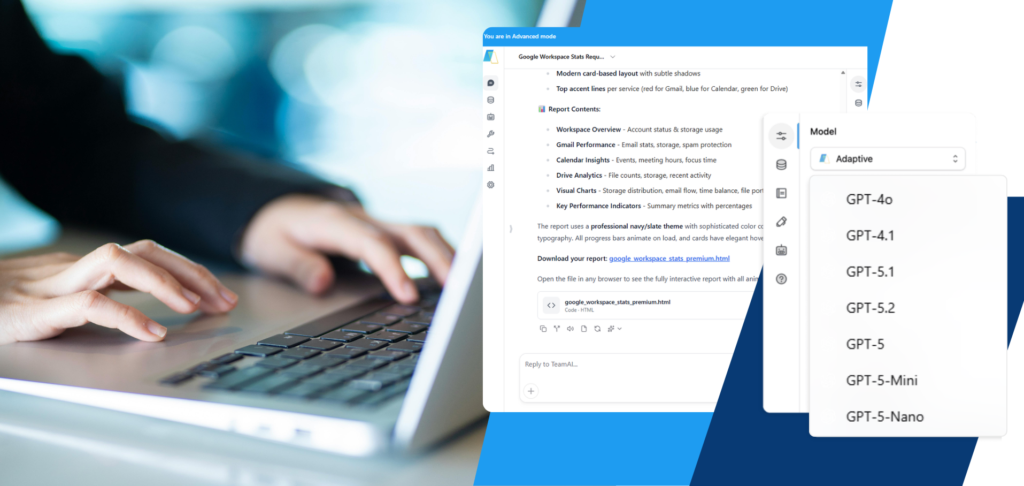
OpenAI: The GPT-5 Family
GPT-4o remains a capable multimodal fallback for teams still running on it. No urgent reason to migrate, but the GPT-5 family delivers meaningfully better performance at competitive prices.
GPT-5 | $1.25 / $10 per M tokens | 272K context
Best for
New general-purpose standard; strong across diverse tasks
Key stat
87.0% LiveCodeBench
Use when
You need a reliable all-around model at a reasonable price point
GPT-5 mini | $0.25 / $2 per M tokens
Best for
High-volume workloads where cost efficiency matters more than top-tier output
Use when
First-pass drafts, volume classification, or routing tasks
GPT-5 nano | $0.05 / $0.40 per M tokens
Best for
Edge inference, classification at massive scale
Use when
Cost-sensitive, high-frequency inference that would have been prohibitive six months ago
GPT-5.1 | $1.25 / $10 per M tokens | 400K context
Best for
Marketing teams running Slack-integrated or customer-facing workflows
Key stats
94% AIME 2025, ~88% GPQA Diamond
Differentiator
Tuned for warmer, more natural conversational outputs; copy needs less editing before it goes out
Recommendation
The OpenAI model most worth evaluating for PMM use cases in 2026
GPT-5.2 (Tiered Inference) | Variable pricing
Inference modes
Instant, Thinking, and Pro: adaptive compute in a single model
AIME 2025
100% ★
GPQA Diamond
92.4% ★
Hallucinations
Claimed 30% reduction vs. GPT-5
Use when
You need peak reasoning performance; build careful cost models before production deployment
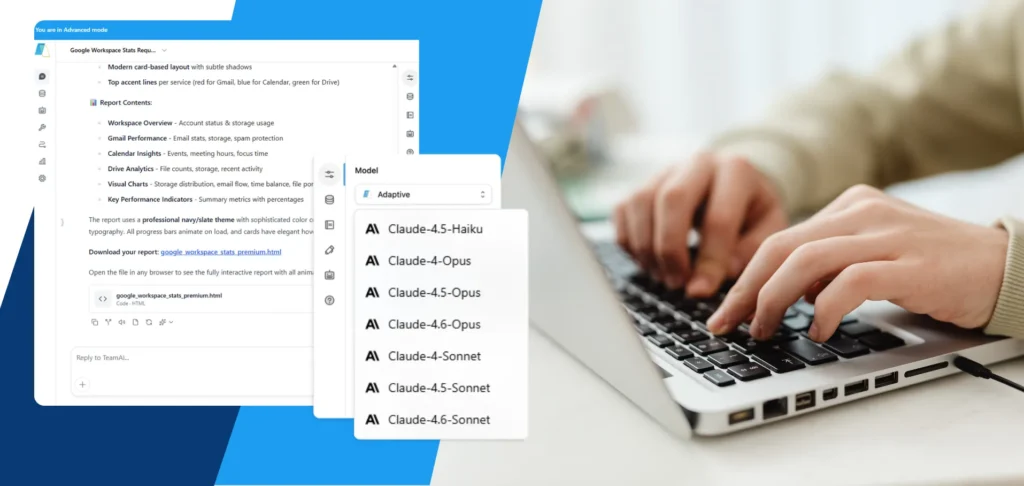
Anthropic: The Claude 4.x Ecosystem
Claude 4.5 Haiku | ~$1 / $5 per M tokens
Best for
High-volume, lower-complexity tasks
Examples
Social variations, first-pass review replies
Quality
~90% of Sonnet quality at a fraction of the cost
Claude 4.5 Sonnet | $3 / $15 per M tokens
Best for
Software engineering and marketing technology builds
SWE-bench
77.2% Verified (top published single-model result)
Autonomy
Up to 30-hour autonomous coding sessions, 11,000-line codebase handling
Recommendation
Most capable AI collaborator available today for teams building custom integrations or automation pipelines
Claude 4.5 Opus | $5 / $25 per M tokens
SWE-bench
>77.2% (exact figure not disclosed; Anthropic confirms it exceeds Sonnet’s score)
Use when
Code correctness matters more than cost; MSPs building production automation; enterprise teams where a single failed deployment is expensive
Claude 4.6 Opus | $5 / $25 per M tokens | 1M context
Key feature
Adaptive thinking: extended reasoning chains applied selectively based on problem complexity
Best for
Deep research, spec synthesis, long-form strategy in a single session
Context
1M token window changes what’s possible for document-intensive enterprise work
Claude 4.6 Sonnet | $3 / $15 per M tokens | 1M context (beta)
Status
New Anthropic default; 70% of users preferred it over 4.5 Sonnet in evaluations
Performance
Near-Opus quality at Sonnet pricing
Recommendation
Recommended starting point for most new Anthropic integrations
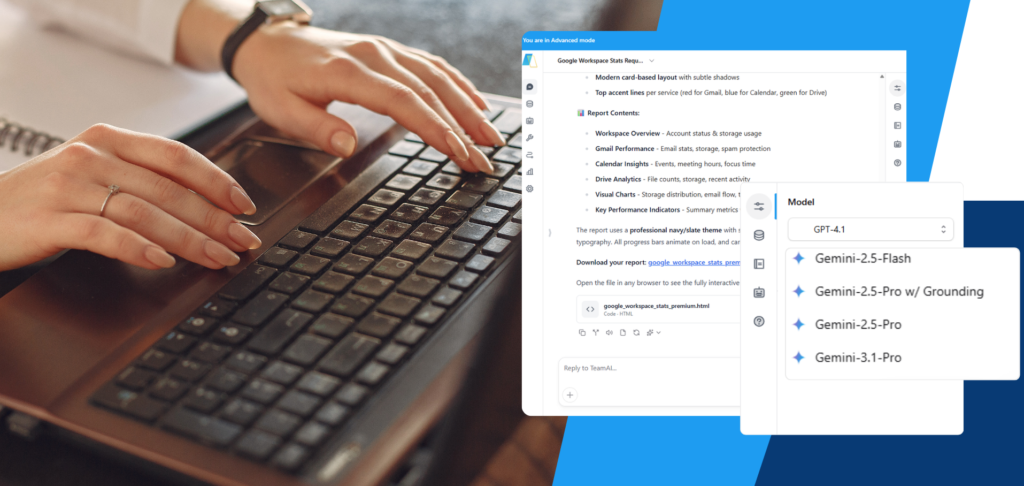
Gemini vs Claude: How Google’s 2026 Models Actually Stack Up
Gemini 2.5 Flash | $0.30 / $2.50 per M tokens | 232 tokens
Best for
High-volume workflows across multiple client workloads simultaneously
Throughput
232 tokens per second, the throughput champion
Context
1M token context window
Use when
You need a fast, cheap backbone for standard requests; MSPs routing volume tasks without watching the meter
Gemini 2.5 Pro + Grounding | $1.25 / $10 per M tokens
Key feature
Live Google Search integration
Best for
Keeping competitive content current without manual updates; agents that need to verify real-time information
Gemini 3.1 Pro (Preview, Feb 19 2026) | Preview
ARC-AGI-2
77.1% ★ (highest published result)
Why it matters
ARC-AGI-2 tests novel reasoning that cannot be memorized from training data; Google’s result is gaming-resistant and harder to explain away than AIME scores
Caution
Preview model; verify production readiness before deploying
Watch
The one to track closely in Q2 2026
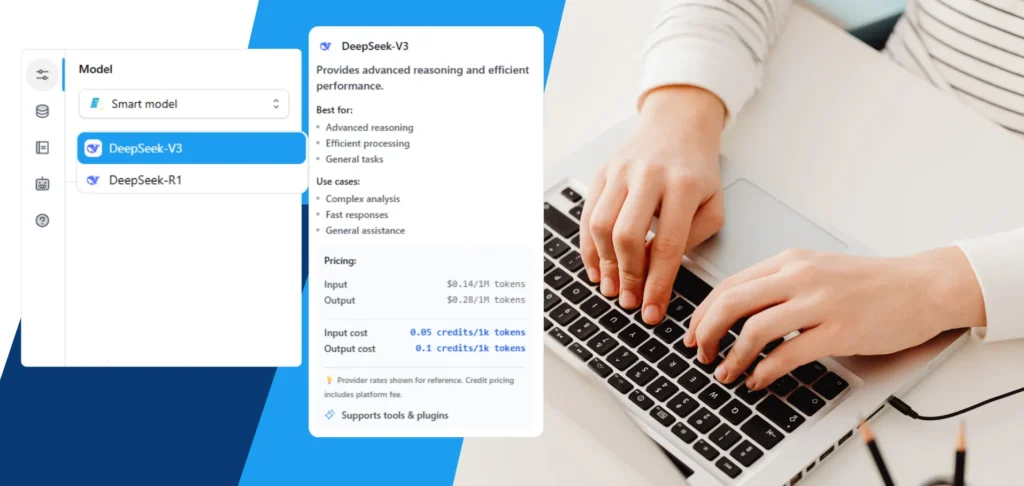
DeepSeek vs GPT: The Open-Source Disruption Case
DeepSeek V3 | $0.27 / $1.10 per M tokens (or free, self-hosted)
Architecture
685B MoE, activates only 37B parameters per forward pass
License
MIT: full commercial use, fine-tuning, and self-hosting with no licensing fees
Best for
MSPs with strict budget constraints and the infrastructure to run their own inference
Impact
Self-hosted V3 changes the unit economics of AI-as-a-service entirely
DeepSeek R1 | $0.55 / $2.19 per M tokens (MIT)
AIME 2025
~70%, competitive with proprietary reasoning models from mid-2024
License
MIT: self-hostable with no restrictions
Best for
Regulated industries (healthcare, legal, financial services) where data cannot leave internal infrastructure
Impact
Capable on-premise reasoning without meaningful capability sacrifice
Open-Source Challengers
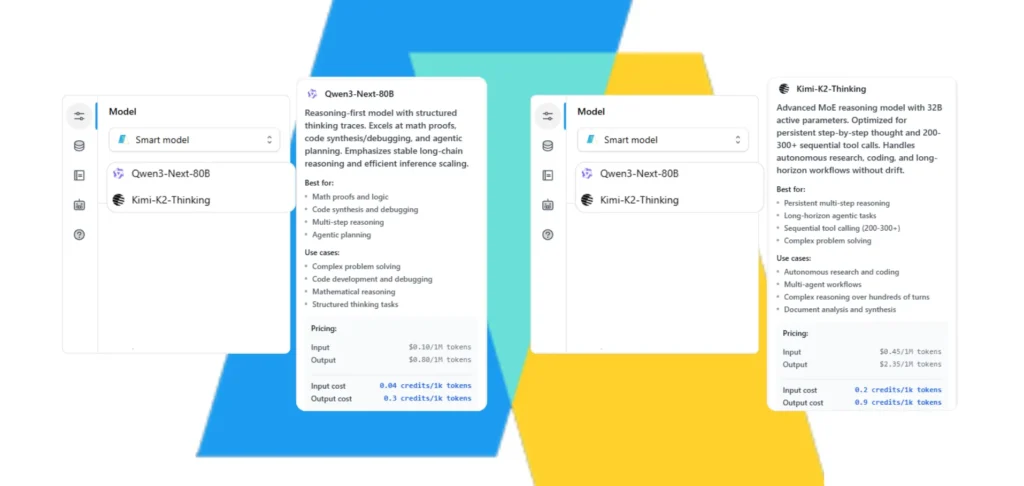
Qwen3 Next 80B | Free (Apache 2.0) | Single high-end GPU
LiveCodeBench
74.6%
License
Apache 2.0: free for commercial use
Best for
Organizations with technical capacity to run inference but not the infrastructure for a 685B model
Impact
Strongest fully-free option; a materially different deployment conversation than DeepSeek V3
Kimi K2 Thinking | $0.60 / $2.50 per M tokens
Architecture
741T-parameter / 32B-active MoE: same efficient design philosophy as DeepSeek V3, applied to a reasoning-specialized model
AIME 2025
99.1%
GPQA Diamond
84.5%
SWE-bench
71.3%
BrowseComp
60.2% (vs. GPT-5’s 54.9%): the best published web research agent at any price
LiveCodeBench
83.1%
Tool calls
200-300 sequential tool calls per session; suited for long-horizon agentic research workflows
Verdict
Best quality-per-dollar in the reasoning category by a significant margin
AI Model Benchmark Showdown: AIME, GPQA, SWE-bench and ARC-AGI-2
★ marks the top score in each column. “—” indicates no published result.
Model
AIME 2025
GPQA Diamond
SWE-bench
LiveCodeBench
ARC-AGI-2
GPT-5.2
100% ★
92.4% ★
~52%
—
—
GPT-5.1
94%
~88%
—
—
—
GPT-5
—
~85%
—
87.0% ★
—
Claude 4.5 Sonnet
100% ★
83.4%
77.2% ★
—
—
Claude 4.5 Opus
—
—
>77.2%
—
—
Claude 4.6 Opus
—
—
52.9%
—
—
Gemini 2.5 Pro
—
84%
—
—
—
Gemini 3.1 Pro
—
—
—
—
77.1% ★
DeepSeek V3
58%
—
—
—
DeepSeek R1
~70%
—
—
—
—
Kimi K2 Thinking
99.1%
84.5%
71.3%
83.1%
—
Qwen3 Next 80B
—
—
—
74.6%
—
Claude 4.5 Opus SWE-bench: exact figure not publicly disclosed; “>77.2%” reflects Anthropic’s claim it exceeds Sonnet’s published score.
Choosing in a Crowded Field
For SaaS Marketing Teams
The biggest mistake in 2026 is routing every task through one model. The teams doing this well use a deliberate model policy:
GPT-5.1 for copy and tone: warmer outputs, less editing before publishing
Claude 4.5 Sonnet for technical docs, integration logic, and extended coding tasks
Kimi K2 Thinking for competitive deep dives and research-intensive workflows
Gemini 2.5 Flash for high-volume Slack summaries and standard turnaround tasks
They’re not managing multiple API subscriptions. They’re running a multi-model workspace where model selection is a configuration decision, not an engineering project.
Recurring PMM Workflows That Drive the Most Value
Release to GTM briefs: A custom agent tuned to your product’s messaging hierarchy, from changelog to structured brief in minutes with minimal editing
Competitive intelligence: Kimi K2 fed into an automated workflow that refreshes your competitive deck on a schedule, without manual intervention
Support macros: Tiered across Claude 4.5 Haiku (volume) and Claude 4.5 Sonnet (edge cases): quality where it matters, cost control everywhere else
For MSPs and Agencies
Deploying AI across multiple clients requires infrastructure that wasn’t designed for that use case. The four things every MSP needs to solve before scaling:
1. Model Selection Per Client
A law firm, a DTC brand, and a manufacturing company have fundamentally different model requirements: on-premise vs. cloud, cost sensitivity, output style. A multi-model workspace with per-workspace model configuration lets you set this once per client.
2. Workspace Isolation
Client A’s prompts, agents, and outputs cannot mix with Client B’s. Workspace-level isolation is non-negotiable for any MSP handling sensitive client data. Each client runs in their own environment, with their own custom agents and knowledge base.
3. Cost Governance
Credit caps and usage alerts per workspace let you control costs without micromanaging every workflow. This is the operational detail that separates MSPs that scale profitably from those that get surprised by their API bill.
4. Embedded AI for Client Products
For MSPs who build or manage client software, deploying AI directly into the client’s product, branded to them and connected to their knowledge base, shifts the relationship from ‘AI consultancy’ to ‘AI product provider.’ TeamAI’s Embed SDK makes this practical without building custom infrastructure per client.
The Pattern That Wins The organizations winning with AI in 2026 aren’t using the highest-scoring model on every task. They’re matching the right model to the right workflow, and running it all from one place.
Frequently Asked Questions
Which AI model is best for marketing teams in 2026?
Claude 4.6 Sonnet for most tasks: near-Opus quality at Sonnet pricing, with 1M context in beta. GPT-5.1 if tone and conversational style matter more. Gemini 2.5 Flash for high-volume tasks at low cost.
What’s the best reasoning model right now?
GPT-5.2 leads on benchmarks (100% AIME 2025, 92.4% GPQA Diamond) but has variable pricing that requires careful modeling before production use. Kimi K2 Thinking scores 99.1% AIME and 84.5% GPQA at $0.60/M: the best quality-per-dollar in this category by a significant margin.
How should an MSP choose which models to deploy for clients?
Match by use case and data requirements. Regulated clients: self-hosted DeepSeek R1 or Qwen3 80B. Marketing and content clients: Claude 4.6 Sonnet or GPT-5.1. High-volume standard tasks: Gemini 2.5 Flash or GPT-5 mini. A multi-model workspace makes this routing manageable without building separate infrastructure per client.
How does Gemini compare to Claude in 2026?
Gemini 2.5 Flash beats Claude on throughput (232 tok/s) and price ($0.30/M). Claude 4.5 Sonnet leads on software engineering (77.2% SWE-bench Verified) and autonomous sessions (30 hours). Gemini 3.1 Pro’s 77.1% ARC-AGI-2 is the most credible novel-reasoning result this cycle, but it’s still in preview. For most production workflows, the choice comes down to task type: throughput and grounding favor Gemini; code and extended autonomy favor Claude.
What is the best AI model pricing in 2026?
The cost floor has dropped dramatically. DeepSeek V3 is free to self-host (MIT license) or $0.27/M via API. Gemini 2.5 Flash is $0.30/M. Kimi K2 Thinking is $0.60/M with near-frontier reasoning. Claude 4.6 Sonnet is $3/M for near-Opus performance. GPT-5.2 is variable and requires cost modeling before production. Teams still using last year’s pricing benchmarks are likely overpaying by a factor of two to five.n deployment. Data tables reviewed quarterly.
More in the 2026 AI Frontier Model War Series
Part 1: The full 22-model landscape, pricing table, and the five macro trends reshaping how organizations should think about AI selection.
This analysis reflects publicly available information as of March 2026. Model capabilities and pricing change frequently; verify current specifications with providers before production deployment. Data tables reviewed quarterly.